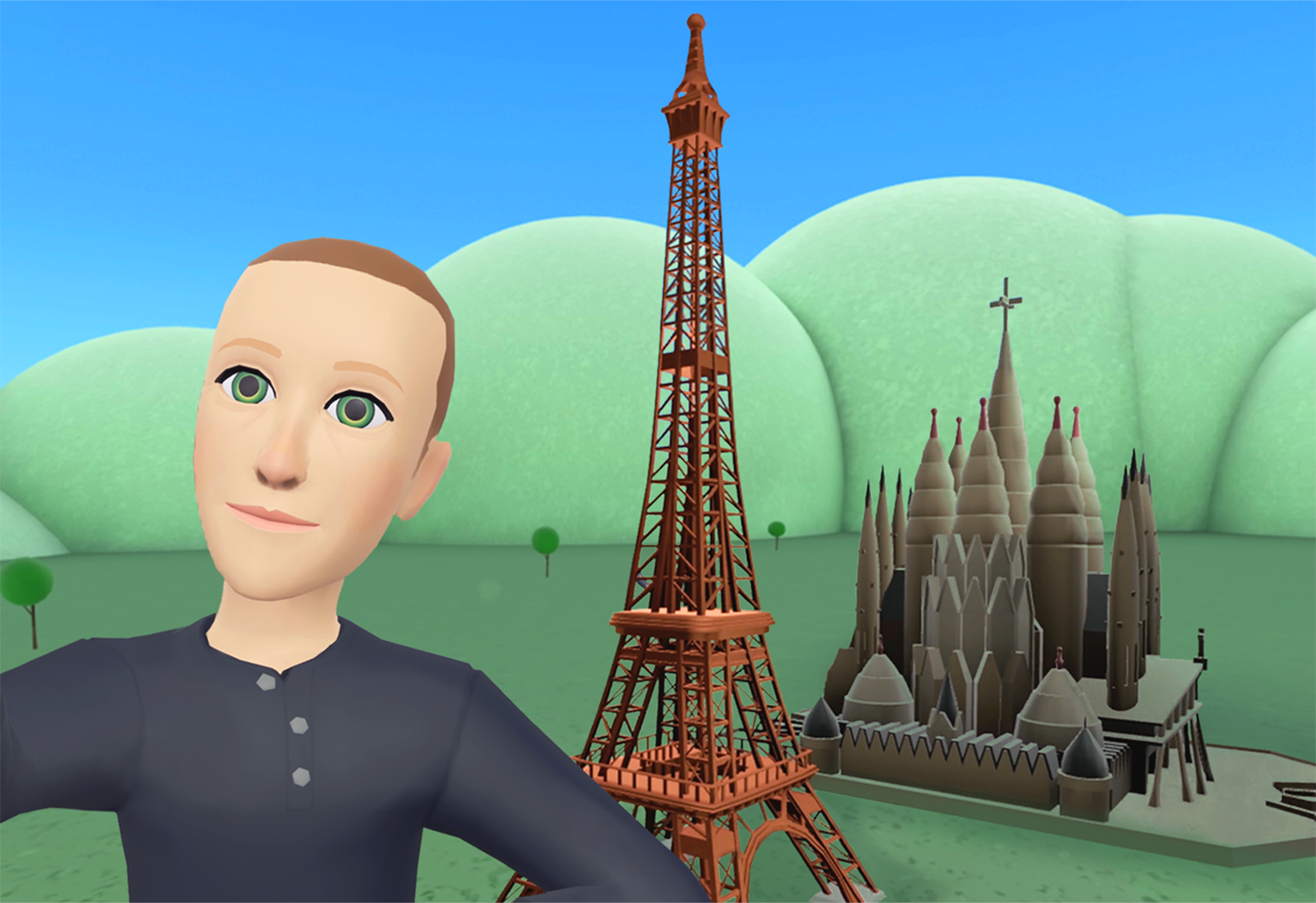
The metaverse is in a bit of a slump right now. Meta announced recently that their flagship metaverse product; Horizon Worlds, is shutting down. This comes after the company invested over $80 Billion in the project alongside the whole brand shift from “Facebook” to “Meta”, signaling their intent in spearheading the future of VR/AR/XR and the metaverse. Unfortunately, things didn’t pan out as well as they wanted to. Firstly, Horizon Worlds only had 10,000 monthly users, which is incredibly low for a concurrent player base that even a basic steam game can achieve. Secondly, their bet on XR being the next big thing in tech hasn’t manifested yet, with most of its current earnings and company focus shifting to the hot new thing; AI.
Other players besides Meta have also seen their lack of return in their vie for the metaverse. Apple’s Vision Pro, while revolutionary in its own right, has been met with mixed reactions. It was touted as a revolutionary piece of hardware that pioneered, in apple’s words, a whole new subset of XR and computing; Spatial Computing. While the hardware and UI of the device was definitely a step up from the competition, the price point of $3500 made it hard for the masses to adopt, even with Apple’s marketing prowess. The vision pro didn’t really take off as well as apple hoped it would with their previous successful launches of their first-generation products (think iPhone, iPod and iPad), with most of its current users being developers and tech enthusiasts.
The landscape is a bit gloom and doom. It’s reported that Microsoft has ceased production on the HoloLens line, their enterprise-focused AR headset. Magic leap, who was a $6 Billion startup that was once touted as the next big thing in AR, has recently filed for bankruptcy. Pico, the XR startup from China’s ByteDance, has also seen a significant drop in sales and market share causing mass layoffs. Overall, XR is currently in its worst state yet.
So what went wrong?
What we are witnessing right now is the end of the “hype” era for VR/AR/XR. This hype which allowed for major players to continuosly invest billions of dollars with minimal profit is no longer sustainable. What we are witnessing is their “sunk cost” era, admitting their mismatched profits and cutting their losses. Investors are getting weary and are demanding more sustainable profits, especially amidst a boom in another sector of tech; AI.
The current boom of AI and its profitability right now is also a factor in the decline of XR. Tech giants such as Google, Meta, Apple and Microsoft, who were once the pillars of the XR world, are now shifting their focus to AI. Staff layoffs or reorganisation, funds redirected and investors more bearish on AI has caused the XR departments in these companies to shrink significantly. Even the computing parts needed for XR hardware is being cannibalised by the supply chains and priorities of AI hardware. As a result of all this, there are ripple effects to the wider XR ecosystem, including startups and developers who rely on the funding and support of these tech giants.
Where to from here?
The good news is, a technology as revolutionary as XR won’t dissapear overnight, even if the hype dies down and the tech giants peter out. XR still has massive upside potential and benefits, but our approach up until now has been naive. Current hardware is still bulky and cumbersome, forcing our natural human biology to adapt to the technology, rather than the other way around. Tech like the Ray-Ban Meta Glasses embrace this other way around approach, by making the technology unnoticeable and seamlessly integrated into a item that we use everyday; glasses. No bulky cartridges, no cables, no motion sickness. The story like those of the Ray Ban Meta Glasses is the story of the future of XR.
From “Immersion” to “Ambient Intelligence”
For a decade, the goal was to shut the world out. We were told the “killer app” was total immersion. We were wrong. The real future of XR is Ambient Intelligence—a digital layer that understands your physical context.
Instead of a headset that transports you to a virtual boardroom, we are seeing the rise of AI-driven optics that stay in the background until they are needed.
The “Visual-to-Action” Pipeline: This is the new gold standard. If you’re looking at a complicated engine or a recipe you’ve never tried, the device doesn’t just show you a video; it identifies the objects in your field of view and overlays 3D, step-by-step instructions.
The AI Whisperer: By integrating Multimodal AI (like Gemini or GPT-4o), glasses are becoming “cognitive prosthetics.” They can translate a sign in real-time or remind you of a person’s name at a networking event.
The industry has realized that XR’s greatest strength isn’t making a new world—it’s making the current one easier to navigate.
The Rise of the “Secondary Device”
One of the biggest “doom” factors was the hubris of the “Phone Killer.” Companies tried to pack a supercomputer into a headset, resulting in devices that were too heavy, too hot, and too expensive.
The survivors have embraced a humbler reality: The smartphone is the sun, and XR is a planet. * Spatial Peripherals: New hardware from players like XREAL and the rumored 2026 Samsung Galaxy Glasses are leaning into “tethered” or “companion” models. By offloading the battery and heavy processing to the phone in your pocket, the glasses on your face can finally look like… well, glasses.
The Private Screen: We are seeing a massive shift toward “Media Glasses”—devices that simply provide a massive, private 100-inch virtual screen for your existing apps and games. It’s not a new ecosystem; it’s a better way to consume the one we already have.
The “Invisible” Success: Enterprise Entrenchment
While the consumer market looks like a battlefield of broken promises, the industrial sector is quietly booming. This is where XR has found its “forever home.”
The ROI is Real: For a consumer, a $3,000 headset is a luxury toy. For a manufacturing plant or a surgical suite, it’s a cost-saving tool.
Training and Simulation: Companies like Varjo have proven that high-fidelity XR can reduce training times by 40% and error rates by nearly 90%. Whether it’s a pilot in a virtual cockpit or a technician repairing a power grid, XR is providing value that doesn’t rely on “hype” or “social networks.”
Digital Twins: The integration of XR with Digital Twin technology allows engineers to walk through a factory that hasn’t been built yet or troubleshoot a machine that is thousands of miles away.
Conclusion
The “gloom and doom” of XR right now is simply the sound of the industry’s training wheels being taken off. No more billions of dollars in experiments and fun money. Leftover is a leaner, focused industry no longer trying to change human nature to suit their products, but rather products trying to enhance human capabilities. With this rise of AI and subsequent increased capabilites of COmputer Vision and Context Awareness, AR and XR is poised to be the front-runner for our future in Human-Computer Interactions. All we need to wait for is the iPhone Moment for XR; a product so seamless and revolutionary that it changes the way we interact with technology forever.